Speed Limits in Germany
Maximum Speed for Cars and Motorcycles
- In urban areas: 50 km/h
- Outside urban areas: 100 km/h
- On highways (Autobahns): No general speed limit, but the recommended speed is 130 km/h. Specific speed limits apply to designated sections marked by signs.
Speed Limits for Trucks and Vehicles with Trailers
- In urban areas: 50 km/h
- Outside urban areas: 80 km/h
- On highways (Autobahns): 80 km/h
Key Traffic Rules in Germany
Speed Limits in Poor Weather Conditions
When visibility is less than 50 meters (e.g., due to fog, rain, or snow), the maximum permitted speed for all vehicles is 50 km/h.
Prohibited Maneuvers on Highways
On highways, the following actions are strictly prohibited:
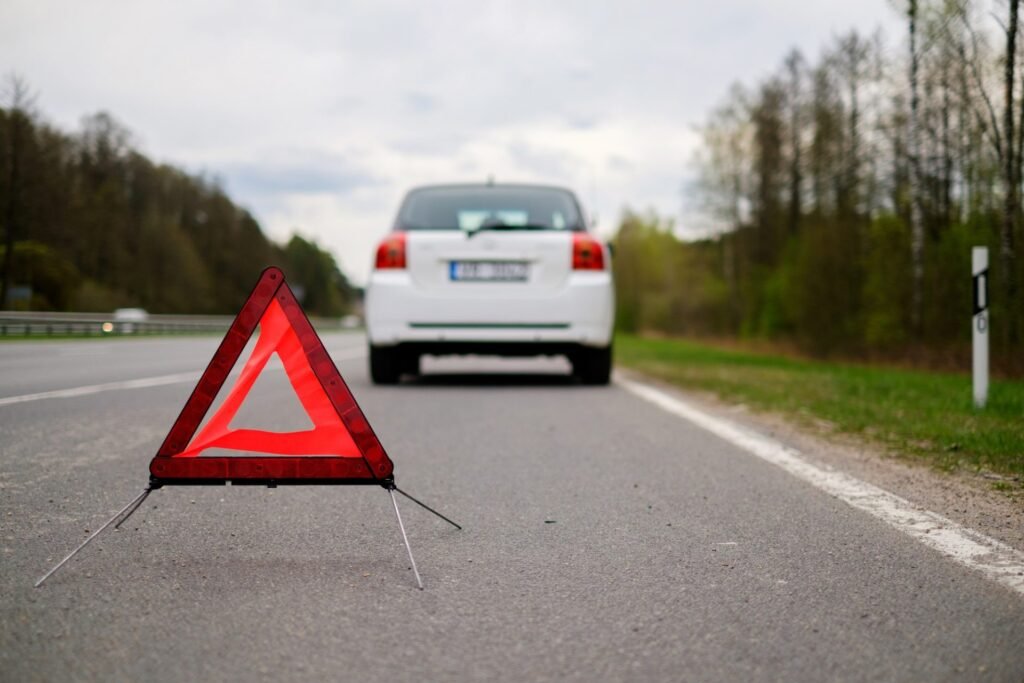
- Stopping, turning around, or parking.
- Entering or exiting outside designated areas.
Signs with “Ausfahrt” indicate highway exits.
Use of Horns and Lights
- Horns and flashing headlights may only be used outside urban areas and in emergency situations.
- Never honk at pedestrians, even if they are crossing in the wrong place.
Pedestrians and Cyclists
- Pedestrians in Germany tend to cross crosswalks at a leisurely pace. Drivers must wait until they have fully crossed.
- Cyclists can enter the driver’s “blind spot,” so always check both mirrors and over your shoulder before turning.
- You may overtake a cyclist only if there is a minimum lateral distance of 1.5 meters.
Vehicle Lights
- Headlights must be used in low visibility conditions (e.g., fog, snow, rain).
- Fog lights are only allowed during poor weather conditions.
Overtaking and Lane Changes
- Overtaking is allowed only on the left.
- Lane changes before intersections are prohibited.
- At road narrowings, vehicles should alternate merging using the “zipper principle” (one car from the left lane, one from the right).
- Overtaking at pedestrian crossings is strictly forbidden.
Emergency Corridor Rule
In traffic jams:
- The right lane must move as far to the right as possible, and the left lane must move as far to the left as possible, creating an emergency corridor for rescue vehicles.
- Do not use this corridor for your own driving, even after emergency vehicles have passed.
Transporting Children
- Children under 12 years old or shorter than 150 cm must be seated in appropriate child seats.
- The number of passengers must not exceed the number of seats in the car.
Parking and Stopping
- Parking starts when the vehicle is stationary for more than 3 minutes or when the driver leaves the car.
- Paid parking areas require a ticket, which must be displayed on the dashboard.
- Free parking for a limited time requires a parking disc (Parkscheibe), available at gas stations.
Highways: Tolls and Exceptions
- Highways in Germany are free for passenger cars, with the exception of certain tunnels:
- Herrentunnel: €1.20–€2.70.
- Warnowtunnel: €2.36–€4.60.
Refueling Your Vehicle
- First, refuel your car, and then pay at the counter.
- If you plan to stay longer at the gas station (e.g., to have coffee), pay for fuel first, move your car to the parking area, and then return.
Using Mobile Phones While Driving
- Mobile phones may only be used with a hands-free device.
- If you stop to answer a call, ensure the engine is turned off to avoid a fine.
Passing Buses
- Passing a bus stopped at a bus stop is allowed only at walking speed (max. 7 km/h).
- If a bus signals its approach to a stop using warning lights, overtaking is prohibited.
Summary
Germany’s traffic rules are detailed and aim to ensure safety for all road users. Following speed limits, being cautious around pedestrians and cyclists, and adhering to traffic signs not only helps avoid fines but also makes driving more comfortable and safe.